Get Weird
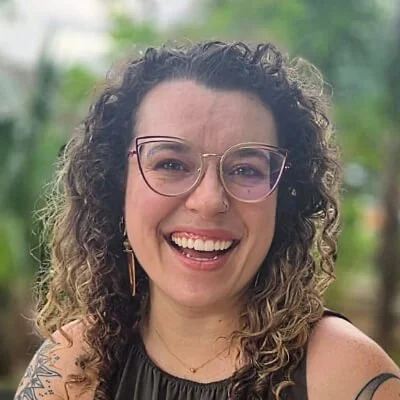
with Shelby Hancock
How often do you get silly with your clients?
How often do you request help from your team?
During today’s meal — I speak with a behavior analyst about her experiences in ABA, getting “weird” and playful with clients, her big move to Mexico, integrating into the community, and navigating chronic pain.
-
Amuse-Bouche
What have you noticed in Mexico regarding support for disabled individuals and the nonexistence of ABA?
Appetizer
How did you get into Behavior Analysis?
What do you mean by “get weird” when helping kids to be their most authentic selves?
Palate Cleanser
Since you’ve moved to Mexico, describe some of your favorite dishes.
Entree
Chronic pain, fighting with insurance, and a severe car accident
How did the pain from your accident affect your work as an RBT years later?
Dessert
What is the best compliment you have ever received?
Excerpts from the Episode
(*Paraphrased highlights)-
I'm kind of a weird individual, but oftentimes when we're placed in positions of leadership with children, there's this expectation that we have to be buttoned up and prim and proper, and teach kids how to be buttoned up and prim and proper. I don't believe that's how kids receive their best learning.
I used to joke that you have to be comfortable being the biggest idiot in the room if you want kids to play with you. I'm going to get on the floor. I love to do handstands with kids. I love to roll around, and people are like, you're going to get your clothes dirty. I have a washing machine at home. I don't care.
These kids are coming to us because they need someone who can help them communicate in a way that other people will understand them, but first they have to be understood.
There have been many moments in my past where I was not understood or I didn't have the ability to communicate to be understood. I realize how frustrating that is and how difficult it is to be that person and not be able to break through to the world around you. I relate to that deeply with the kids that I work with.
I find that if I can be the weird adult that they feel they can relate to, then we can make progress and I can help them help their family understand them. When they feel that you can connect with them, I have found that they're way more likely to go along with what you're asking them to do rather than if you're staring at them from the bridge of your nose, like you're weird and we have to fix that.
-
It impacted it heavily. I did a lot of grinning and bearing it, I'm strong, I'm tough, I’ll get through this. I didn't always realize that it was affecting me until I'd go, go, go, and then I'd get to the weekend and I couldn't get out of bed, or I would have to take multiple days off work. I'd be eating up all my PTO.
It's definitely affected some of the more physical components of the job. I am usually upfront with people. I try not to trauma dump on people because it can be a fine line, but it’s like, hey I have this thing going on I need you to be aware of.
I had back surgery in January of 2022 so in between 2015 and 2022 I was just relying on my body and my muscles and my strength to hold everything up. Then in 2022, it was determined that I had a disc all the way across my spinal cord. They removed that disk and the disk underneath of that one because they were both dead. Now I have two metal cages, two rods, and six screws in my spine.
Working alongside techs, I have to share with them, hey I've got this going on, I literally will need you to watch my back. I had a kid at a clinic hit me with a fist to the back of my spine. That put me down for a couple days, because it hit in the right spot that then my nerves were inflamed and I had to rest.
I've been really fortunate that people are understanding. We work in a therapy field so people are more willing to allow for some of those accommodations and things like that, but it's been a challenge physically.
-
I had a client and she was really tough. She was engaging in a lot of really disruptive behaviors, flooding her house, setting her bed on fire. She also had a sibling who was diagnosed as autistic and this particular family was a single parent family. Mom was really stressed and overwhelmed.
Mom also had her own learning history and her own history of trauma that this kiddo I think triggered a lot. I trained mom on childhood leisure and creating this positively framed environment in their home, working on power struggles, connection over compliance, cooperation over compliance, these kinds of things.
We were sitting in a parent training, maybe six months after we had started working together. She looked at me and told me that I was the reason why she had fallen back in love with her children and fallen back in love with being their mother.
To know that I was able to affect that family so deeply, that's something that I'm going to carry with me until the day I die, and really drives me when I'm feeling like an imposter.
-
This learner was a little older than my typical learner (I am usually in the 3-7 age range). She was bright, well-spoken, and highly independent with her ADLs. She needed support with allowing others to shine. She loved to win and had a hard time if she perceived she didn't come in first for ANYTHING: lining up, foot races, answering questions in class…
She was also having huge challenges with demand avoidance and operating within any sort of hierarchical system. Any female figures of authority were persona non grata; teachers, principals, club leaders... Anyone who she realized held power in a system was immediately an enemy.
When we had our first few sessions, I had just started at this clinic and she didn't know me well. We had the most fun. I dare say we had the best sessions I've ever had in my career (at this point I was like 9 years in. We played, we did gymnastics, she followed my lead, and answered my questions/ responded well to my requests.
She realized, however, after about the third session, that I was a leader in this group because she realized that people were asking me treatment questions. She thought I was the big boss of the clinic. That made me public enemy number one.
Any time after that, she would scream, meltdown, engage in high magnitude agg (154 instances in 15 minutes) toward me if I told her I would be in her session. I trained up in ACT, worked with her mom to help repair that relationship at home, and over time we became thick as thieves.
It took me about 8 full months of allowing her to ignore me, dictate where I sat during the session, and using all of my Hanley and ACT skills, but by the time I left that job, she was my bestie. On my last day, she asked to walk me to my car, gave me a huge hug with tears in her eyes, and said "I love you Ms Shelby". I was a wreck. I also had tears in my eyes, and that kid will live in my heart forever.
She now does team sports and can tolerate coming in 6th/7th place with a smile on her face. I think she was my proudest moment because of how hard I fought to ensure her treatment went the way I felt it should go, worked hard in parent sessions to get buy-in, and saw the fruits of my efforts in a way that seems sustainable and the reason why we all do this job.
ABOUT Shelby
Shelby Hancock, MA, BCBA, LBA
Shelby is a Board Certified Behavior Analyst with over a decade of experience working in the field of ABA across multiple roles.
She earned her Bachelor's degree in Recreation, Parks, and Tourism with a concentration in Recreation Therapy from Radford University in Radford, VA in 2016 and her Master's Degree in Special Education with emphasis in ABA curriculum from Arizona State University in 2020. She earned her BCBA and LBA credentials in 2021, and has spent her career since then specializing in early intervention.
Shelby has a passion for play-based interventions, and credits her unconventional background in rec therapy along with her many years riding horses and working as a camp counselor for her ability to "get weird" with kids in ways that allows them to be their most authentic selves.
She began her career in ABA as a teacher's assistant at a well known CABAS (Certified Applied Behavior Analysis School) program in Richmond, VA, where she called home for many years.
Her professional interests include early intervention, building functional communication with her young clients, and sharing the magic that comes along with getting into a child's world with their grown-ups as they navigate the trenches of early parenthood through parent training.
Shelby currently resides in Merida, México with her husband and their three pets, where she is currently focusing on perfecting her Spanish and making a new city feel like home.
In the future, she hopes to build a network in her area to find avenues to support families and help the community better understand autism and the needs of autistic people. In her free time, she enjoys making art, gardening, yoga, reading, and exploring local cuisine.
CONNECT with Shelby
Instagram: @shelby_like_the_mustangPlease support our podcast by leaving a rating or review!

(When on Apple Podcasts, scroll down the episodes to find the review area.)
Visit my Podcast page to learn more about Behavior Bites!