Rest and Do Less
with Kelsey Hunter
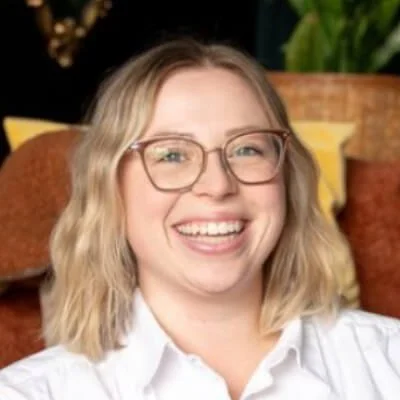
How often do you step back and view behavior on a macro level?
What if doing nothing was the better choice?
During today’s meal — I speak with a behavior analyst in Pennsylvania about caregiver support, neuroaffirming care, her favorite foods, and being a chronically ill baddie.
-
Amuse-Bouche
How did you get into jiu jitsu?
Appetizer
How did you get into Behavior Analysis?
How is your chronic illness journey going?
Palate Cleanser
Describe your favorite quintessential Pennsylvania food.
Entree
What’s a typical day in your life look like?
Dessert
What is the best compliment you have ever received?
Excerpts from the Episode
(*Paraphrased highlights)-
I kind of fell into it. I was getting my undergrad in psych at West Chester University and I was looking for opportunities to learn more, do different stuff.
I always felt like I wanted to help people. There was a small nonprofit autism clinic associated with the University. I ended up volunteering there for a while. It was one of those things where I was like, this makes so much sense to me, I feel like I'm good at it, and I want to do more.
There was a feeling of rightness. I also think this is why I have such an aversion to people being like, "Oh my God, you are just an angel for doing this work” etc. etc. I think this idea that we don't get anything from this is really crazy to me.
I think my motivation is the reinforcing value that I get— the reinforcement that I get from my interactions with staff, with clients, with families. That to me is a more valuable reinforcer than most things, which is what drives me to continue to work in this field. This is a really difficult field to live and work in. If there wasn't reinforcement, why would I do it?
-
I think it's tough in a lot of ways. However, I'm in a particularly lovely place in the work that I'm doing because I'm working in a setting using a modality that not a lot of BCBA's get to use, which is really nice.
Being in a hospital setting means the work that we're doing is very different. It also means that I don't have to do a lot of the things that my illness makes difficult. I don't have to do a lot of driving. I don't have to do a lot of in-person assessment of high acuity behaviors, things like that.
I'm privileged in that position, but it's also taught me a lot about advocacy and how difficult it is to accept your current state of being and advocating for yourself when you are having a hard time with your chronic illness.
Having to repeatedly explain, discuss, share how difficult life is and the adaptations you need— If I had an ego before, it is now dead. There is no ego left. It's a lesson in humility.
-
I often hear from my parents that they don't want to work with another practitioner. They are like, "Kelsey's the best. I love her and I love her approach.” Which is such a compliment to me, but it also speaks to my understanding of the science in general.
It makes me hopeful that I can help other practitioners speak about it and apply it in similar ways so other parents have really good experiences.
I often get families that have had ABA, lost the service, or maybe had a not great experience. They come to me and they don't know anything. They don't understand any of the foundations of it.
Being a previous in-home, in-clinic BCBA, you don't have time to sit. You really don't have the luxury to sit there and explain the science of behavior analysis. I'm in a position where that's my whole job.
I really love that compliment. It makes me hopeful that people like you and me, and our colleagues are able to give more good experiences to families.
-
One of my biggest career wins and probably the biggest compliment is— I did a consultation with a family and the person was having severe self-injury. Non-speaking but really robust receptive vocabulary, knows so much, understands so much, and having a really hard time in school. They were restraining them pretty frequently.
My advice to them was stop. The behavior will stop if you stop restraining.
It had a lot more to do with listening to his precursor behaviors and creating more communication opportunities. I observed when they were having a hard time, the more we talked, the more we touched. I mean, why wouldn't you be agitated, right?
So that was one of my biggest career wins. The behavior analysts that was on their school team was super collaborative, super open, said, "We're going to trial this. We're going to take data. We're going to stop restraining."
Rates of SIB went down significantly. They haven't had to restrain them since, and it was just one conversation where I said, "Perhaps removing his autonomy is making the problem."
ABOUT Kelsey
Kelsey Hunter, MA, BCBA, LBS
Kelsey Hunter is a Board Certified Behavior Analyst (BCBA) and Licensed Behavior Specialist (LBS) with almost 10 years of experience supporting individuals and families with autism spectrum disorders (ASD), intellectual disabilities, and severe behavior disorders.
Kelsey is a skilled clinician that prides herself on her ability to provide meaningful connection, honesty, and values-based interventions to the individuals and families she works with. She aims to provide therapeutic support through a trauma informed, neurodiverse affirming (NDA) lens to caregivers, parents, and siblings who have loved ones with social learning differences.
CONNECT with Kelsey
Instagram: @theradicalbehavioristTikTok: @theradicalbehavioristWebsite: fulllivingwellness.com/kelseyhunterPlease support our podcast by leaving a rating or review!

(When on Apple Podcasts, scroll down the episodes to find the review area.)
Visit my Podcast page to learn more about Behavior Bites!